
Why Do People Turn to PRP?
Finding extra strands on your pillow every morning, or catching your scalp showing through under bathroom light, isn't a small thing. Hair loss has this quiet way of eating at your confidence long before anyone else even notices. Thankfully, treatment options have improved a lot over the years, and PRP has become one of the more reliable non-surgical routes for people catching their hair thinning early.
At Dr. Youth Clinic, we get asked about PRP constantly, probably because it works with what your body already produces instead of putting something foreign into your system. This piece breaks down what PRP is, how it actually functions, who should consider it, and what kind of results are realistic.
So What Exactly Is PRP?
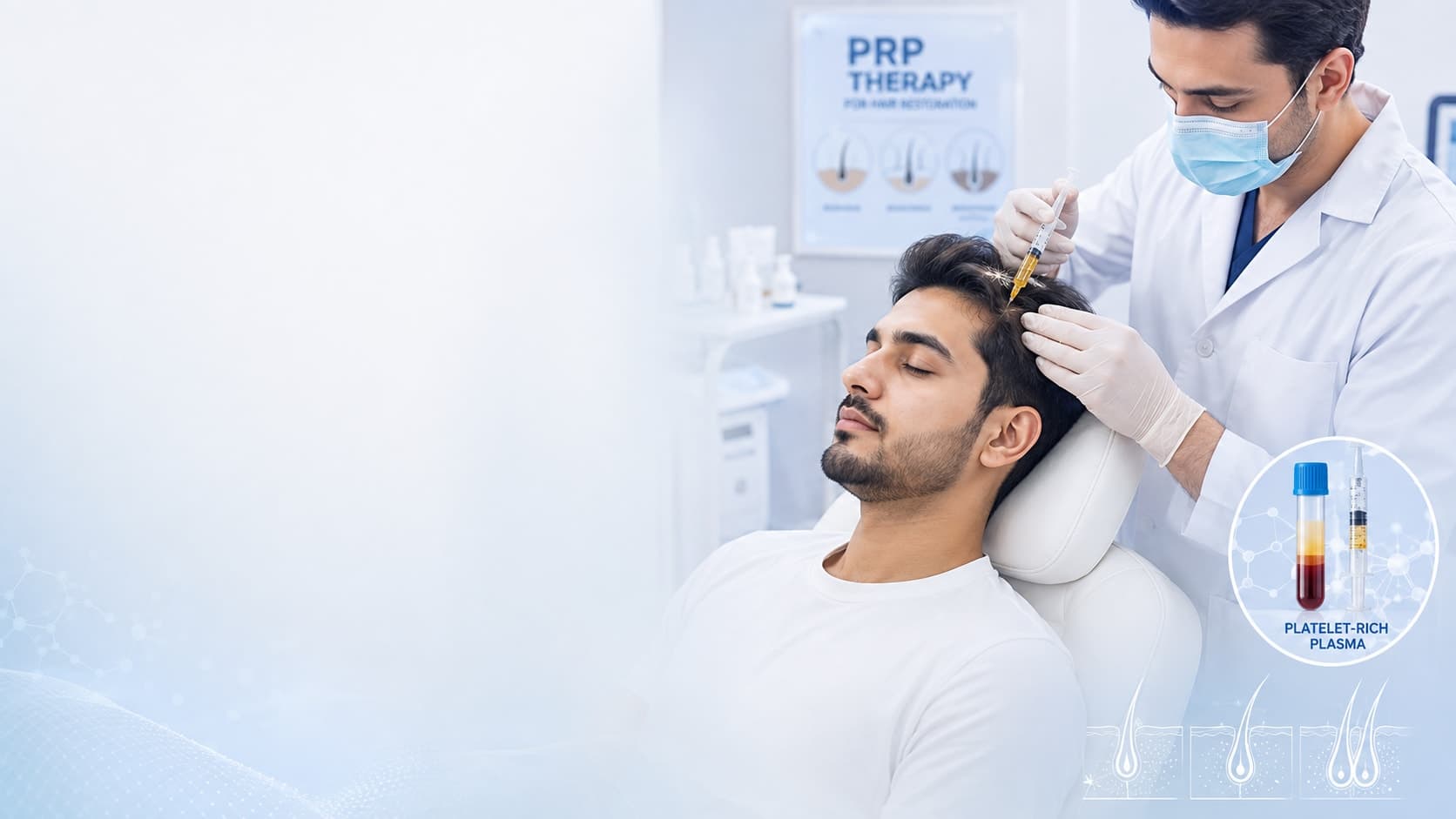
PRP is short for "platelet-rich plasma." The process is pretty simple: a small sample of blood is drawn from your arm, then spun in a centrifuge to pull out the platelet-rich part. That plasma then gets injected back into the thinning areas of your scalp. Platelets carry growth factors, the same compounds your body uses to heal wounds and repair tissue.
Once that concentrated plasma reaches the scalp, it kickstarts follicles that have gone weak or inactive. And because it's your own blood being used, allergic reactions basically aren't a concern here.
How It Actually Helps Hair Grow Back
Hair doesn't just grow in a straight line; every strand cycles through growth, rest, and shedding phases. When follicles stop getting proper blood flow or nutrients, they gradually weaken, the hair they produce gets thinner, and eventually growth stops altogether.
What PRP does, essentially:
- Boosts blood circulation to the scalp
- Wakes up follicles sitting in a dormant phase
- Makes existing strands stronger
- Cuts down on excess shedding
- Stretches out the active growth period
Don't expect instant results, though. Hair takes time to respond; most people see less shedding within the first two months, and actual thickness starts showing around the four-to-six-month range.
Is PRP Worth Considering?
PRP isn't a fix for every kind of hair loss, and it's worth being upfront about that instead of overselling it. Generally, it works best for people who:
- Are dealing with early to moderate thinning
- Still have some follicle activity in the problem areas
- Have genetic hair loss (androgenetic alopecia)
- Are losing hair due to stress, post-pregnancy changes, or nutrient deficiencies
- Would rather try something non-surgical first
If a patch of scalp is completely bald with zero follicle activity left, PRP won't bring hair back there on its own; that's just how it works. In those cases, it's usually paired with other treatments, or a hair transplant becomes the better option.
What to Expect During Your Treatment Session
Most of the nervousness around PRP comes from not knowing what the appointment looks like. In practice, it's a quick process and not particularly uncomfortable.
It begins with a small blood draw from your arm, nothing different from a standard blood test. That sample goes into a centrifuge to separate out the plasma. Meanwhile, numbing cream gets applied to your scalp, and once it kicks in, the plasma is injected into the thinning spots using thin needles.
The whole thing takes somewhere between 60 and 90 minutes. You might notice some redness or tenderness for a day or two afterward, but there's no real recovery time needed; most people head straight back to their day.
How Many Sessions Do You Really Need?
This depends on how far along the thinning is and how your scalp responds. Typically, four to six sessions spaced three to four weeks apart form the initial treatment course. After that, occasional maintenance sessions help keep the results going.
It's a bit like going to the gym; one session isn't going to change much on its own, but sticking with it over months is where you actually see a difference.
PRP, Medication, or Transplant: Which Makes Sense?
People often ask how PRP stacks up against other options.
Oral or topical medications can slow things down but they usually need to be used forever and side effects are not uncommon for some. Hair transplants on the other hand offer a permanent solution but they are more invasive, have a recovery period and are generally reserved for advanced cases.
PRP sits somewhere in the middle minimally invasive, made from your own body, and effective whether used alone or combined with other approaches. A lot of dermatologists actually prefer combining PRP with a broader plan rather than treating it as a standalone solution.
Side Effects and Why They're Usually Nothing Serious
Since PRP comes from your own blood, the risk of a bad reaction is low. That said, there are a few minor, short-term effects that can occur:
- Mild redness or swelling around the injection sites
- Mild scalp tenderness
- Occasional mild headache
These usually resolve on their own within a day or two. Since no synthetic material is used, the risk of infection is also low when performed by trained professionals in a clean environment.
Setting Realistic Expectations
Results differ from person to person; age, how advanced the thinning is, and individual response to the growth factors all play a role. Some notice less shedding fairly early on, while visible thickness usually takes a few months to become obvious.
PRP works best as part of an ongoing routine rather than a one-time treatment. Pair it with good scalp care, the right products, and paying attention to diet and stress levels.
What Determines Whether PRP Works for You
A handful of factors influence how well the treatment pays off:
- Sticking to the recommended session schedule
- Choosing a clinic with proper hygiene standards and trained staff
- Eating enough protein, iron, and essential vitamins
- Keeping stress levels in check, since stress is a known trigger for hair thinning
- Steering clear of harsh chemical treatments during the course
At Dr Youth Clinic, every plan gets built around the person's individual hair pattern and scalp condition rather than a one-size-fits-all approach, which tends to produce more consistent outcomes.
Before You Decide
Hair thinning can feel discouraging, but options like PRP make it possible to tackle the issue early, naturally, and without going under the knife. It's a simple procedure, relies on your body's own healing process, and doesn't come with much downtime, a practical choice for anyone wanting real results without a major commitment.
If your hair fall has been bothering you, don't wait it out. Book a consultation at Dr Youth Clinic for a proper scalp assessment and find out if PRP is the right call for you.
Frequently Asked Questions
Does PRP hurt more than microneedling? +
I have PCOS-related hair thinning—will PRP help? +
Can I dye or straighten my hair during treatment? +
Will my hair fall out again if I stop? +
Does PRP work the same for men and women? +
Is there an age limit? +
What should I avoid before a session? +

Reviewed By
DR Moideen Beevee. T
Cosmetology
BHMS, Cosmetology · 4+ years experience

